Regional Regulatory Shifts Impact Reel Software Adaptation Cycles in Licensed Markets
Written by Amir Wagner · Jul 6, 2026
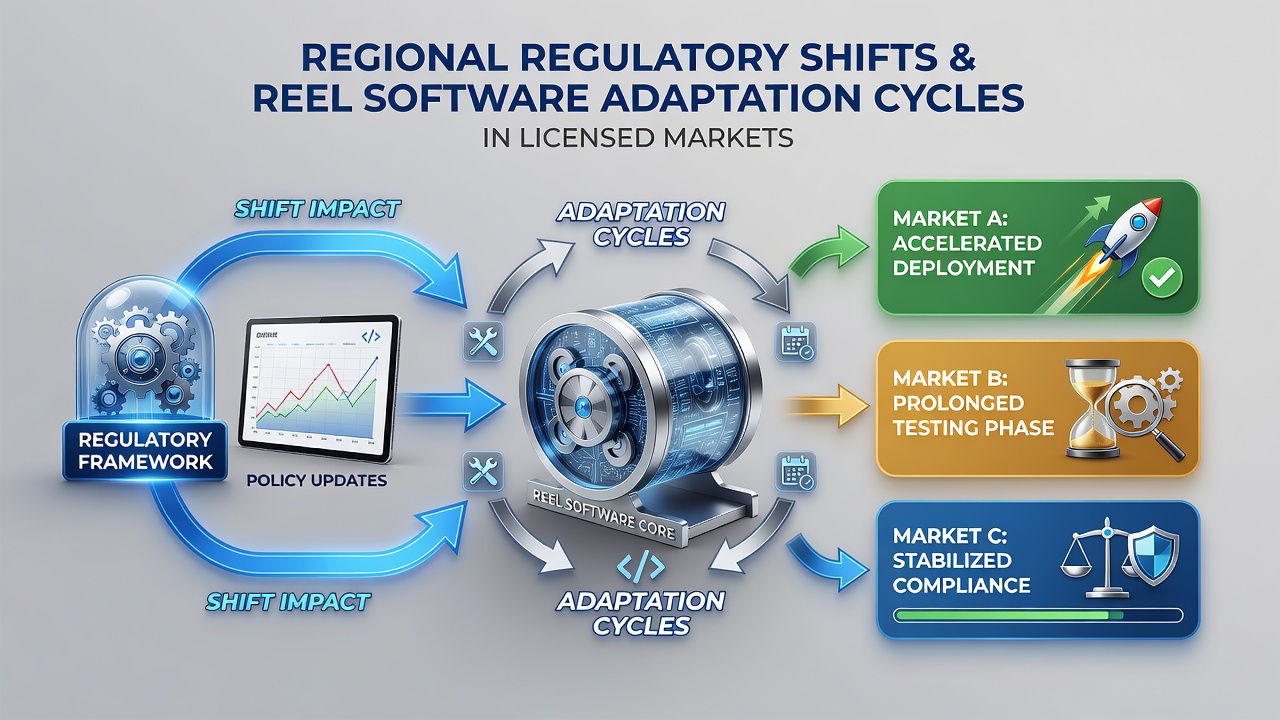
Regional Regulatory Shifts Impact Reel Software Adaptation Cycles in Licensed Markets
Regulatory changes across multiple jurisdictions continue to reshape how software developers modify reel mechanics, bonus structures, and certification processes for digital gaming platforms, and these adjustments directly influence adaptation timelines in licensed environments. Data from industry monitoring services shows that providers must recalibrate their development cycles to align with new compliance requirements, particularly when rules governing random number generators, payout percentages, and feature disclosures shift without extended notice periods. Observers note that such modifications often require extensive retesting, which extends the interval between initial concept and market release by several weeks or months depending on the region involved.
North American Market Adjustments
States within the United States have introduced varying standards for game certification that affect how reel sequences incorporate player protection tools and audit trails, and companies operating across borders must therefore maintain parallel development tracks to satisfy each set of rules simultaneously. Pennsylvania's gaming oversight body published updated technical standards in early 2026 that require enhanced logging of reel outcome sequences, which in turn prompted several suppliers to revise their core engines before launching new titles in that market. Meanwhile, Canadian provinces have focused on transparency mandates around volatility indicators, leading developers to embed additional display layers that communicate risk levels without disrupting existing gameplay flows.
European and Asia-Pacific Developments
European regulators outside the United Kingdom have emphasized localized content rules and data residency requirements that force reel software to undergo region-specific builds, and these constraints compress the window available for global feature rollouts. In Australia, recent amendments to interactive gaming codes have required providers to integrate mandatory session timers directly into reel interfaces, which has accelerated adaptation cycles for platforms seeking to maintain multi-jurisdictional licenses. Research from academic institutions tracking digital gambling infrastructure indicates that synchronization between these regional mandates and existing certification protocols now represents one of teh primary bottlenecks in software deployment schedules.
Effects on Development Timelines
Adaptation cycles have lengthened notably where regulators demand pre-approval of any reel modification that alters mathematical models or visual presentation layers, and this process often involves multiple rounds of third-party audits before deployment can proceed. Figures from provider filings reveal that projects targeting simultaneous launches across three or more licensed markets now require an average of 18 additional weeks compared with single-jurisdiction releases, primarily due to iterative compliance reviews. Those who've studied these patterns observe that smaller studios face disproportionate delays because they lack dedicated regulatory affairs teams capable of managing concurrent submissions.

Integration of new responsible gaming features, such as dynamic stake limits tied to player behavior analytics, further complicates reel engine updates in markets that adopted stricter harm-minimization frameworks during the first half of 2026. July 2026 saw several suppliers publish revised roadmaps that deferred certain progressive reel features until certification pathways in key European and North American territories could accommodate the additional code layers required for compliance. Industry associations tracking these shifts report that collaborative working groups between regulators and developers have begun to standardize documentation formats, which may eventually reduce duplication in testing procedures across borders.
Certification Protocols and Market Access
Certification bodies in different regions apply distinct evaluation criteria to reel randomness and payout verification systems, and providers must therefore maintain version control systems that isolate code branches for each jurisdiction. According to reports issued by the New Jersey Division of Gaming Enforcement, recent updates to testing methodologies have increased the granularity of sequence analysis required during approval stages, which directly extends the time from submission to clearance. Similar patterns appear in regulatory filings from Australian authorities, where emphasis on cultural representation guidelines has added review steps for visual assets used in reel sequences.
Those monitoring adaptation cycles note that markets with streamlined mutual recognition agreements experience faster software iterations, whereas regions operating independent evaluation processes create cumulative delays when providers pursue multi-license strategies. External research compiled by European gaming trade organizations highlights how these variations influence resource allocation, with larger companies able to absorb extended timelines through diversified portfolios while others prioritize fewer territories at any given time.
Conclusion
Regional regulatory shifts continue to drive measurable changes in how reel software reaches licensed markets, and the resulting adaptation cycles reflect the interplay between compliance demands, technical requirements, and cross-border operational realities. Data compiled through mid-2026 demonstrates consistent patterns of extended development windows tied to certification complexity, while ongoing dialogue between oversight bodies and industry participants may gradually introduce efficiencies in documentation and testing procedures. Providers that maintain flexible architectures capable of supporting jurisdiction-specific modules appear better positioned to navigate these evolving conditions as additional regulatory updates emerge in subsequent quarters.